The Donner Mechanical Metronome review centers on a straightforward practice tool: a wind-up mechanism, adjustable tempo, selectable beat emphasis, and an audible pulse.
Its design may suit learners and instrumentalists who want a dedicated rhythm reference without relying on batteries.
Donner DPM-1 Review Summary
The quick verdict
1,000+ ratings
Read Amazon ReviewsDonner DPM-1 Mechanical Metronome
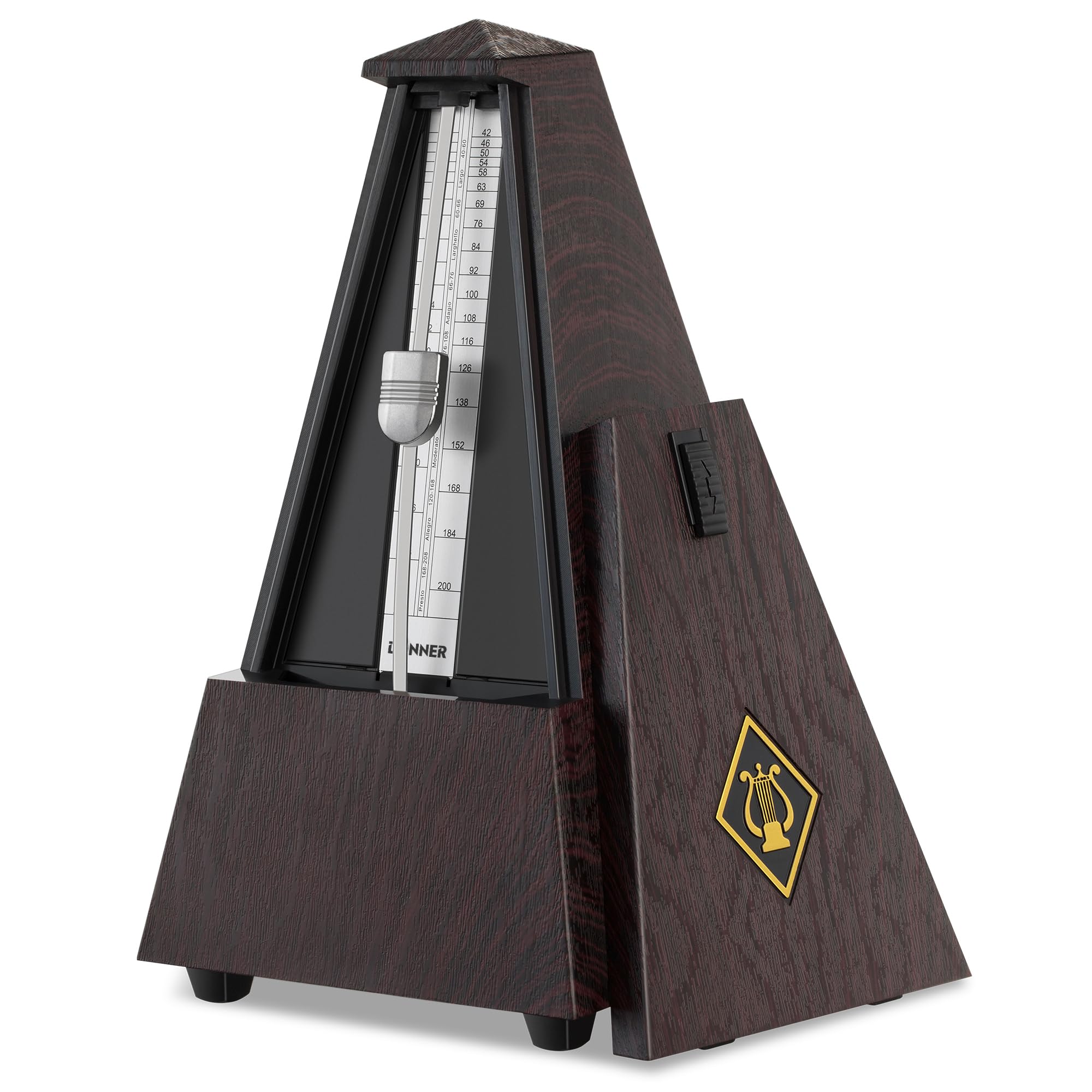
A battery-free, wind-up metronome for learners and musicians who want adjustable tempos, selectable beats, and a clear audible pulse during practice.
- Mechanical spring-wound operation; batteries are not needed to power the metronome.
- Tempo adjustment from 40 to 208 beats per minute.
- Beat selection options of 0, 2, 3, 4, and 6.
- Five-position on/off bell control for beat emphasis.

Pros
- Broad tempo range for slow exercises and faster passages.
- Selectable beat emphasis can make the rhythmic accent easier to hear.
Consider before buying
- The spring mechanism needs winding, so practice sessions may require occasional resets.
- The listed beat choices are specific; check that they cover the meters and subdivisions you use.
Read the full review summary
The DPM-1 covers a useful range of everyday practice needs, with tempos from 40 to 208 beats per minute and beat selections of 0, 2, 3, 4, and 6.
A five-position bell control and wood-block-style beat sound give players ways to hear the pulse and mark accents while working through passages.
Its mechanical operation and pendulum-based controls keep setup simple: wind the spring, set the tempo and beat, then start the pendulum. That approach fits beginners, children, and musicians who prefer a traditional standalone metronome.
Buyers should consider whether a mechanical pulse and the listed beat choices match their practice routine.
The buying factors
Donner DPM-1 Scorecard
Editorial scores reflect listed features and buyer fit; they are not laboratory measurements or customer ratings.
Tempo range
The adjustable 40–208 BPM span covers slow work and many brisk practice tempos.
Beat selection
Five settings, including an unaccented option, offer useful choices for common meters.
Accent control
The five-position bell control can help make the beat emphasis easier to follow.
Ease of operation
Pendulum-based tempo selection and wind-up operation keep the basic routine simple.
Power convenience
The spring mechanism avoids battery changes, though it does require winding.
Tempo consistency
A listed tolerance of 1% is a useful specification for practice, though it is not an independent measurement.
Key Features and Specifications of Donner DPM-1
- Mechanical spring-wound operation; batteries are not needed to power the metronome.
- Tempo adjustment from 40 to 208 beats per minute.
- Beat selection options of 0, 2, 3, 4, and 6.
- Five-position on/off bell control for beat emphasis.
- Wood-block-style beat sound intended to provide an audible practice pulse.
- Pyramid-style design with a central pendulum.
Pros and Cons of Donner DPM-1
Pros
- Broad tempo range for slow exercises and faster passages.
- Selectable beat emphasis can make the rhythmic accent easier to hear.
- Spring-powered design avoids dependence on batteries.
- Pendulum controls offer a simple, traditional way to set and follow tempo.
Consider before buying
- The spring mechanism needs winding, so practice sessions may require occasional resets.
- The listed beat choices are specific; check that they cover the meters and subdivisions you use.
- The audible mechanical pulse may not suit practice settings where a quieter or headphone-based reference is preferred.
Who Should Buy Donner DPM-1?
Good fit
Consider the Donner DPM-1 if you want a standalone metronome with a traditional pendulum and no battery requirement.
Its 40–208 BPM range, selectable beats, and bell control provide practical tools for building steady timing and hearing accents during instrument practice.
It may be especially approachable for beginners or children because the basic routine is direct: wind it, choose a tempo and beat, and set the pendulum moving.
Players who value tactile, visible tempo movement alongside an audible pulse may find that style useful for focused practice.
Who should skip it
Look elsewhere if your practice depends on beat patterns beyond the listed 0, 2, 3, 4, and 6 settings, or if you need a particular subdivision. Confirm that the available controls fit your exercises before choosing it.
It may also be a poor fit when you need a quiet, headphone-based click or want to avoid winding a spring between sessions. Consider how and where you practice before settling on a mechanical design.
How the Donner DPM-1 Fits a Practice Routine
Tempo range for varied exercises
The 40–208 BPM range gives room to slow down difficult passages and gradually increase speed.
The control is useful for routine tempo work, while players should confirm that the upper and lower ends fit their specific repertoire and exercise plans.
Beat choices and accents
Selections of 0, 2, 3, 4, and 6 pair with a five-position bell control, giving the player options for hearing a pulse with or without a marked beat.
This can help when learning where emphasis falls, though the listed choices do not establish support for every meter or rhythmic subdivision.
Mechanical operation in everyday use
A spring powers the regular beats, and the pendulum provides a visible movement to follow. This removes battery upkeep from the routine, with winding as the corresponding manual step before or during longer practice.
Audibility and practice setting
The wood-block-style sound is described as loud, which is intended to help learners keep track of rhythm.
Since rooms, instruments, and personal preferences differ, consider whether an audible mechanical pulse is appropriate for your space and whether you need a different listening method.
Alternatives to Donner DPM-1
No alternative model is recommended here. Compare the beat options, sound, and operation that matter to your routine before choosing another metronome.
Is Donner DPM-1 Worth It?
The Donner DPM-1 is worth considering if you want a simple wind-up metronome with a broad tempo span, a visible pendulum, and selectable beat emphasis.
Its battery-free operation and beginner-friendly setup make it a practical match for straightforward instrument practice.
Before buying, check that its available beat settings cover your exercises and that a mechanical pulse suits your practice environment. The need to wind the spring is the main day-to-day tradeoff.
Your review at a glance
1,000+ ratings
Read Amazon ReviewsDonner DPM-1 Mechanical Metronome
A battery-free, wind-up metronome for learners and musicians who want adjustable tempos, selectable beats, and a clear audible pulse during practice.
- Mechanical spring-wound operation; batteries are not needed to power the metronome.
- Tempo adjustment from 40 to 208 beats per minute.
- Beat selection options of 0, 2, 3, 4, and 6.
- Five-position on/off bell control for beat emphasis.